·
scanning teams at




The bone scan. For your engineering org.
See what's amber before it goes ember.
Marrow fuses repo, on-call, and team signal into one diagnostic — so engineering leadership reads the drift before it ships.
You already suspect it.
An engineer who used to push twice a day now pushes twice a week. A service hasn't been refactored in fourteen months and three of the four people who'd know how are gone. Two engineers carry seventy-one percent of the on-call rotation and don't say it out loud. The #payments-platform channel has gone quiet in a way that isn't peaceful.
None of this shows up in Datadog. None of it shows up in Lattice. It will show up — in a quit, in an outage, or in a rewrite.
Marrow shows it now.
Read your scan →One instrument. Three signals. One reading.

Repo signal. Refactor cadence, ownership distribution, silent SLO drift, the modules everyone writes around.

On-call signal. Page distribution, incident clustering, the engineers carrying the rotation and the engineers who don't.

Team signal. The shape of communication — response cadence, channel quietness, the patterns that precede a departure. Patterns only. Never message content.
Fused per service into a single reading: bone, amber, or ember.
L2 · billing-svc · refactor cadence steady · on-call balanced · channel responsive
T7 · payments-api · push cadence ↓ 61% · on-call load 71% · refactor +14mo
C5 · auth-edge · two owners left · 9 incidents in 14d · channel silent 23d
The leader who saw it first.
Engineering-org drift used to be invisible until the quit, the outage, or the rewrite. The signals existed — repo cadence, on-call distribution, the silence in #payments-platform — but no instrument fused them.
Marrow does.
The CTOs running scans this quarter are the ones walking into the board meeting with a slide labelled intervention plan instead of post-mortem. The dignity of being the leader who saw it first is the product.
See a sample report →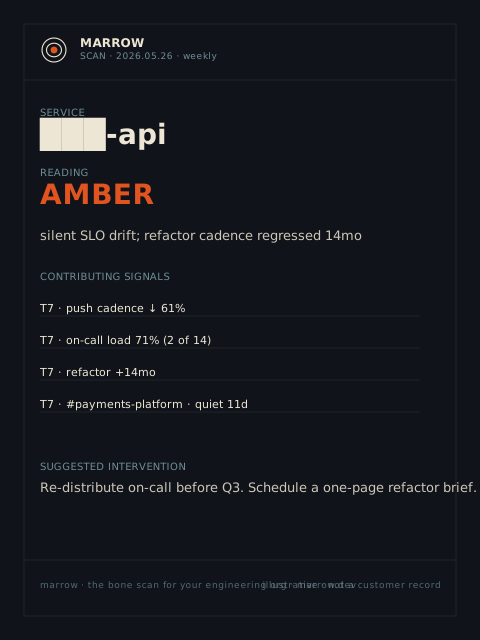
Currently scanning.
127
engineering orgs already scanned
*plausibility marks, not customer claims. The real customer wall ships when the real customers do.
What the instrument reads. And what it doesn't.
Do you read my team's messages?
Where does the data come from?
Who sees the scan?
What does the report look like?
How fast is the first scan?
Request your bone scan.
One repo. One on-call rotation. One channel id.
First reading in 24 hours.
The instrument runs in the dim room whether you're watching or not — the scan happens; the question is whether you're the one reading it.